What to Eat on Tirzepatide: A Complete Tirzepatide Meal Plan for Better Results

Tirzepatide changes the way your body responds to food, and what you eat while on it matters more than most people expect. This guide walks through the foods to eat, the foods to avoid, and how to structure your meals to support your results, your energy, and your digestive comfort.
Key Takeaways
- Prioritize lean protein, fiber-rich complex carbs, and healthy fats at every meal to support fat loss while preserving muscle mass.
- Smaller, more frequent meals help manage nausea and work with tirzepatide's appetite-suppressing effects rather than against them.
- Certain foods, including fried foods, greasy foods, refined carbohydrates, and sugary drinks, can worsen gastrointestinal side effects and slow your progress.
- Staying hydrated with 8 to 10 cups of fluid daily is essential for digestive health and overall metabolic function.
- A physician-guided nutrition plan makes a meaningful difference in both tolerability and long-term weight management outcomes.
How Tirzepatide Affects the Way You Eat
Tirzepatide works by activating two key hormonal pathways, GLP-1 and GIP, which together slow gastric emptying, reduce appetite, and improve insulin sensitivity. The practical result: you feel full faster, stay full longer, and think about food less often.
That shift in hunger signals is a meaningful advantage for people working toward weight loss. But it also means your food choices carry more weight. When your caloric intake drops and your portions shrink, every bite needs to work harder nutritionally. A thoughtful tirzepatide diet plan is not just about eating less. It is about eating smarter.
People taking tirzepatide tend to consume significantly fewer calories than before starting the medication. Research from the SURMOUNT trials found participants losing an average of 20 to 22 percent of body weight over 72 weeks when combining the medication with lifestyle modifications. Getting the right nutrients within that reduced intake is what separates people who lose fat and feel well from those who stall, lose muscle, or struggle with side effects.
Best Foods to Eat on Tirzepatide: The Foundation
Protein is the most important macronutrient to protect while on tirzepatide. When you are eating less and losing weight quickly, your body is at risk of breaking down muscle tissue alongside fat. Hitting adequate protein targets each day protects lean muscle, supports metabolic health, and keeps you feeling satisfied between meals.
Aim for 20 to 30 grams of protein per meal. High protein foods to prioritize include:
- Grilled chicken breast
- Baked salmon and fatty fish like sardines and mackerel
- Eggs and egg whites
- Cottage cheese
- Greek yogurt (plain, full-fat or low-fat)
- Lean ground turkey
- Tofu and tempeh
- Legumes like lentils and black beans
Grilled chicken is one of the most versatile and consistent lean protein sources available. It is easy to prepare in bulk, pairs with nearly any vegetable, and delivers around 25 to 30 grams of protein per four-ounce serving with minimal saturated fat.
Greek yogurt deserves special mention. It delivers a strong protein punch, typically 15 to 20 grams per cup, while also providing probiotics that support gut health and digestion. For people dealing with tirzepatide-related digestive changes, Greek yogurt is one of the most practical high protein snacks available.
How much protein you need depends on body weight and activity level, but a general target for people on a medical weight loss journey is 0.7 to 1 gram of protein per pound of body weight per day. For most adults, that means somewhere between 100 and 160 grams daily.
Healthy Fats Support Satiety and Heart Health
Healthy fats slow digestion, support hormonal function, and provide sustained energy without spiking blood sugar. On a reduced-calorie plan, healthy fats also help you feel satisfied on smaller portions.
Olive oil is one of the most important healthy fats to work into your daily eating habits. It is rich in monounsaturated fats, anti-inflammatory compounds, and oleocanthal, which has been studied for its effects on cardiovascular and metabolic health. Use olive oil as your primary cooking fat. Drizzle olive oil over roasted vegetables, whisk it into salad dressings, or use olive oil for low-heat sautéing.
Other healthy fats worth building into your meal plan:
- Avocado and avocado oil
- Almonds, walnuts, and cashews
- Chia seeds and flaxseeds
- Fatty fish like salmon and mackerel
- Olives
- Full-fat Greek yogurt and cottage cheese
Healthy fats are calorie-dense, so portion awareness still applies. A tablespoon of olive oil delivers around 120 calories. The goal is not to avoid healthy fats, but to include them intentionally. Two tablespoons of olive oil per day is a reasonable, evidence-supported target for both heart health and metabolic benefit.
Avocados provide healthy fats alongside fiber and potassium, making them one of the more complete foods to eat when you are trying to stabilize blood sugar and support satiety. Half an avocado adds around 7 grams of healthy fats with 5 grams of fiber, a combination that slows glucose absorption and extends the feeling of fullness.
Chia seeds are compact and effective. Two tablespoons provide 5 grams of healthy fats, 10 grams of fiber, and a meaningful source of omega-3 fatty acids. They absorb water and expand in the stomach, which can help signal fullness on smaller portions.
Fiber-Rich Carbs and Complex Carbohydrates
Complex carbohydrates provide fiber, micronutrients, and steady glucose release without the blood sugar spikes that come with refined carbohydrates and sugary foods. On tirzepatide, complex carbs help you hit your fiber targets (aim for 25 to 30 grams per day) and support the digestive motility that can slow during treatment.
Best foods to eat in the complex carb category include:
- Quinoa
- Brown rice
- Sweet potatoes
- Oats
- Lentils and chickpeas
- Whole grain bread and crackers
- Steamed broccoli and other cruciferous vegetables
- Leafy greens like spinach, kale, and arugula
Sweet potatoes are worth highlighting. They deliver fiber, potassium, beta-carotene, and complex carbohydrates in a naturally sweet package that feels satisfying without pushing blood sugar too high. A medium sweet potato contains around 4 grams of fiber and has a moderate glycemic impact compared to white potatoes or white rice.
Brown rice is a practical staple. It takes longer to digest than white rice, which means a slower, more stable effect on blood sugar. Pair brown rice with lean protein and a vegetable to create a balanced, tirzepatide-friendly meal that covers multiple nutritional targets at once.
Leafy greens like spinach and kale are among the most nutrient-dense foods to eat on any eating plan, and especially on a reduced-calorie protocol. They provide folate, magnesium, iron, and antioxidants with almost no caloric cost. Fill half your plate with leafy greens and non-starchy vegetables before adding your protein and complex carbs.
Greek Yogurt, Cottage Cheese, and High Protein Snacks
Between-meal snacking on tirzepatide should be intentional. Your appetite may be significantly reduced, but snacks serve a purpose: they help distribute protein intake throughout the day, prevent blood sugar dips, and keep energy steady.
Reliable high protein snacks include:
- Greek yogurt with chia seeds
- Cottage cheese with a drizzle of olive oil and herbs
- Hard-boiled eggs
- A small handful of nuts
- Edamame
- A small piece of fatty fish on whole grain crackers
Greek yogurt paired with chia seeds is one of the more complete mid-morning snack options. The combination delivers protein, healthy fats, fiber, and probiotics in under 200 calories, and it is easy to prepare ahead of time for busy schedules.
Cottage cheese has had a significant resurgence in nutrition conversations, and for good reason. It is high in casein protein, which digests slowly and provides essential amino acids over several hours. A half-cup serving delivers around 13 to 14 grams of protein. It also contains calcium and phosphorus, supporting bone health alongside muscle maintenance.
Foods to Eat for Blood Sugar Control
How to Stabilize Blood Sugar While on Tirzepatide
Tirzepatide improves insulin sensitivity and helps regulate blood sugar directly through its GIP and GLP-1 activity. But your food choices either support or undermine that effect. Certain foods to eat can work alongside the medication to stabilize blood sugar more effectively. Others trigger blood sugar spikes that create energy crashes, increase hunger later in the day, and place unnecessary strain on your metabolic system.
To stabilize blood sugar throughout the day:
- Pair carbohydrates with lean protein and healthy fats at every meal
- Choose fiber-rich carbs over refined carbohydrates
- Avoid sugary drinks, fruit juices, and sweetened dairy
- Eat regular meals rather than skipping and overeating later
- Start meals with vegetables and protein before moving to carbs
Olive oil used in food preparation slows gastric emptying slightly and reduces the glycemic impact of a meal when added to carbohydrate-containing dishes. This is another reason to make olive oil your default cooking fat.
Blood sugar stability also supports mood, focus, and energy levels, which are relevant for the high-performing, health-conscious adults who typically pursue a physician-guided weight management protocol. Keeping blood sugar steady is not just a metabolic goal. It affects how you feel and function throughout the day.
Best Foods to Eat for Sustained Blood Sugar Stability
Foods that consistently help stabilize blood sugar include:
- Leafy greens (spinach, kale, Swiss chard)
- Non-starchy vegetables (zucchini, peppers, cucumber, steamed broccoli)
- Fatty fish and lean protein sources
- Whole grains and legumes
- Healthy fats from olive oil, avocado, and nuts
- Greek yogurt and cottage cheese
- Chia seeds and flaxseeds
These foods to eat share common characteristics: they are high in fiber, rich in protein or healthy fats, and low in refined sugars. They support steady glucose release, reduce insulin demand, and provide essential nutrients without the spikes that erode blood sugar control.
Foods to Avoid on Tirzepatide
Greasy Foods and Fried Foods
Greasy foods and fried foods are the category most likely to worsen nausea and gastrointestinal discomfort on tirzepatide. The medication slows gastric emptying, meaning food stays in your stomach longer. High-fat, greasy foods slow digestion further, amplifying any digestive heaviness or nausea you might already experience.
Fried foods also tend to be calorie-dense and low in essential nutrients, which is counterproductive when your daily caloric intake is already reduced and nutrient efficiency matters. Fried foods that commonly trigger nausea include:
- French fries
- Fried chicken
- Onion rings
- Fried appetizers and fast food sides
- Heavily breaded proteins
Replacing fried foods with baked, grilled, or roasted preparations of the same ingredients delivers better nutritional outcomes and significantly reduces gastrointestinal discomfort. If you previously relied on fast food as a convenient meal option, this is a practical area to adjust early.
Refined Carbohydrates and Sugary Drinks
Refined carbohydrates, including white bread, white rice, pasta, pastries, and crackers made from refined flour, digest quickly and push blood sugar up sharply before it drops again. This pattern of blood sugar spikes followed by crashes can trigger hunger even when tirzepatide is reducing appetite through other mechanisms.
Sugary drinks are particularly problematic. Liquid calories do not register satiety the same way solid food does, meaning you can consume significant calories from juice, soda, sweetened coffee drinks, and energy drinks without feeling full. These drinks also create rapid blood sugar spikes that undermine the blood sugar control tirzepatide works to establish.
Foods to avoid or minimize in this category include:
- Soda and sweetened beverages
- Fruit juice (even 100 percent juice)
- Candy and desserts
- White bread and rolls
- Sweetened breakfast cereals
- Pastries, muffins, and donuts
- Sweetened flavored yogurt
Very Low Calorie Diets
While tirzepatide reduces appetite significantly, pursuing very low calorie diets alongside the medication creates real risks. Restricting calories too aggressively can accelerate muscle loss, lead to nutrient deficiencies, and slow your metabolic rate over time, making long-term weight management harder.
Most adults on a tirzepatide protocol should target between 1,200 and 1,800 calories daily depending on gender, starting weight, and activity level. Going below 1,000 to 1,200 calories consistently is not recommended without direct physician oversight, and doing so without hitting adequate protein and essential nutrients undermines the fat loss quality you are working toward.
If you are unsure how many calories to target, this is a conversation worth having with your healthcare provider before adjusting your eating plan significantly.
Tirzepatide Meal Plan: Structuring Your Day
Eating Smaller Meals More Frequently
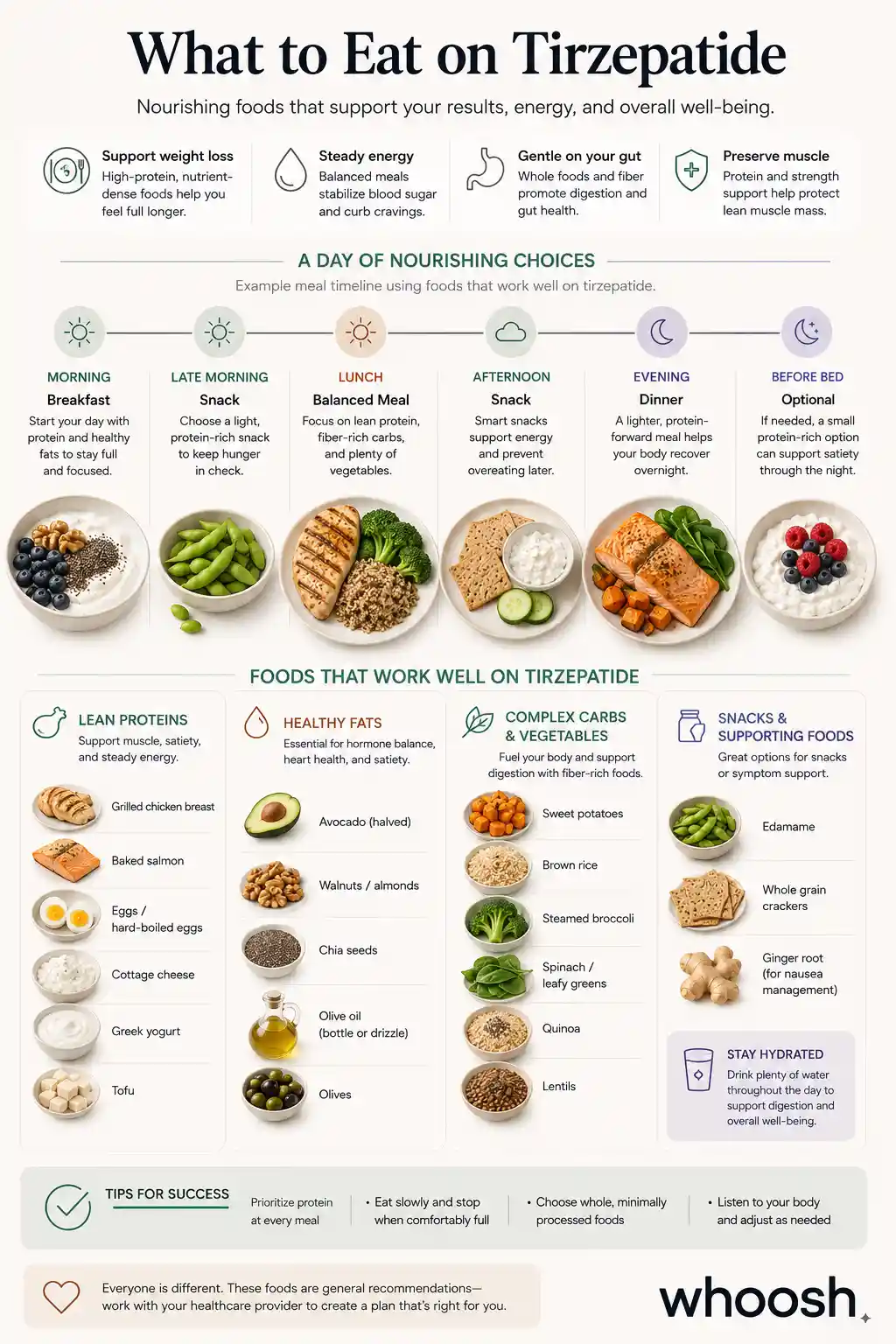
Eating smaller meals spread across the day is one of the most effective structural adjustments for people on tirzepatide. Four to six smaller meals daily reduces the likelihood of nausea, prevents overeating at any single sitting, and helps distribute protein intake more evenly for better muscle protein synthesis.
A simple framework for structuring meals on tirzepatide:
- Morning meal: Eggs scrambled with leafy greens and a drizzle of olive oil, plus a small portion of whole grain toast
- Mid-morning snack: Greek yogurt with chia seeds
- Midday meal: Grilled chicken over brown rice with steamed broccoli and olive oil
- Afternoon snack: Cottage cheese with a small handful of walnuts
- Evening meal: Baked salmon with sweet potatoes and a leafy green salad dressed with olive oil and lemon
This structure keeps meals manageable in volume while covering the key nutritional targets: lean protein at every meal, healthy fats from olive oil and fatty fish, complex carbohydrates from brown rice and sweet potatoes, and fiber from leafy greens and vegetables throughout.
Portion Sizes and Plate Composition
Portion control looks different on tirzepatide than it might on a standard diet. Because the medication dramatically reduces appetite and slows gastric emptying, you may feel full well before finishing even a modest meal. Starting with smaller portions and adding more if needed is more practical than serving full portions and stopping partway through.
A useful visual framework for plate composition:
- Half your plate: leafy greens and non-starchy vegetables
- One quarter of your plate: lean protein
- One quarter of your plate: complex carbohydrates or fiber-rich carbs
This arrangement naturally prioritizes the foods to eat that support blood sugar stability, satiety, and nutrient density while keeping the overall volume manageable. Using smaller plates, around 8 to 9 inches, reinforces appropriate portions visually without requiring calorie counting at every meal.
Hydration and Tirzepatide
Staying hydrated while on tirzepatide is more important than it might seem. Dehydration can worsen nausea, contribute to constipation, and accelerate fatigue. Because the medication reduces appetite and thirst signals can be subtle, many people underdrink without realizing it.
Target 60 to 90 ounces of water or non-caloric fluid daily, which roughly aligns with 8 to 10 cups. Sipping fluids between meals rather than during meals reduces the risk of feeling prematurely full or displacing food volume with liquid. Carbonated drinks can worsen bloating and should be minimized, particularly in the early weeks of treatment when gastrointestinal adjustment is most pronounced.
Ginger supplements and ginger-based beverages like unsweetened ginger tea are worth considering for people dealing with nausea. Ginger has a well-documented effect on gastric motility and mild nausea management, and it is a practical, low-risk addition to a tirzepatide nutrition plan.
Eating Habits That Support Your Medical Weight Loss Journey
Building Consistent Food Choices
Tirzepatide changes your relationship with appetite, but it does not build new eating habits automatically. The people who get the best long-term results from a physician-guided weight loss protocol are those who use the appetite reduction as a window to establish sustainable food choices and eating patterns rather than simply eating less of the same things.
Practical habits that complement a tirzepatide diet plan:
- Preparing lean proteins in batches at the start of the week (grilled chicken, hard-boiled eggs, cooked lentils)
- Keeping Greek yogurt, cottage cheese, and cut vegetables accessible in the refrigerator
- Planning meals in advance to avoid defaulting to fast food or processed options when appetite returns
- Eating at consistent times to support circadian alignment and blood sugar stability
- Focusing on minimally processed foods rich in nutrients rather than convenience foods engineered for palatability
Minimally processed foods rich in whole ingredients are the foundation of any sustainable eating plan, and especially so on tirzepatide, where nutrient efficiency matters given the smaller overall caloric intake.
Supporting Gut Health and Digestion
Tirzepatide slows gastric motility, which means digestive health deserves attention throughout treatment. Constipation and bloating are among the most commonly reported gastrointestinal side effects. Dietary strategies that support digestion can meaningfully reduce these issues.
Foods to eat that actively support gut health and digestion include:
- Leafy greens and high-fiber vegetables
- Chia seeds and flaxseeds
- Greek yogurt with live cultures
- Legumes and lentils
- Olive oil (which supports gut motility when consumed regularly)
- Fermented foods like plain kefir or kimchi
Fiber intake is the most important dietary lever for managing constipation on tirzepatide. Hitting 25 to 30 grams of fiber daily through food, rather than relying solely on supplements, is the most sustainable approach. Combining adequate fiber with consistent hydration addresses the majority of constipation concerns for most people.
Plant-Based Protein Options
Lean protein does not have to come exclusively from animal sources. Plant-based protein options can fit seamlessly into a tirzepatide nutrition plan and offer the added benefit of additional fiber and phytonutrients.
Reliable plant-based protein sources include:
- Lentils (18 grams of protein per cooked cup)
- Edamame (17 grams per cup)
- Tofu and tempeh
- Chickpeas and black beans
- Hemp seeds
- Pea protein-based products
For people following a plant-forward eating plan, combining plant-based protein sources throughout the day ensures a full profile of essential amino acids, which supports muscle mass preservation alongside fat loss.
How Whoosh Supports Your Tirzepatide Nutrition Plan

At Whoosh, the tirzepatide protocol is designed around more than just the medication itself. A physician-guided approach means you have access to ongoing clinical oversight, personalized dosing guidance, and support for the nutritional and lifestyle side of your protocol, not just the prescription.
Whoosh sources compounded tirzepatide from 503B-licensed pharmacies, ensuring pharmaceutical-grade quality and consistency. The program also emphasizes microdosing GLP-1 protocols as a meaningful differentiator, helping people find the minimum effective dose that manages appetite and supports metabolic health without unnecessary medication intensity.
For people who have avoided injectable wellness protocols due to the complexity or discomfort of administration, Whoosh's physician-guided approach provides a structured, supervised pathway with ongoing support. Self-administered care, when properly guided, is both practical and effective for motivated, health-conscious adults.
If you are ready to get started, consult with a Whoosh physician today about a compounded tirzepatide protocol that fits your weight loss goals.
About Whoosh
Whoosh is a premium physician-guided telehealth wellness platform helping health-conscious adults optimize performance, longevity, recovery, and metabolic health through modern prescription wellness protocols. Built for people who already invest in their health, Whoosh combines a seamless digital experience with ongoing physician oversight, trusted pharmaceutical partnerships, and science-backed wellness education. The Whoosh platform offers protocols spanning metabolic optimization, hormonal wellness, recovery, and healthy aging, all delivered remotely with physician support at every stage.
Common Questions About Diet and Tirzepatide
Meet the Author

Reviewed By

Related articles

.avif)
.avif)