Is Sermorelin FDA Approved? What You Need to Know

Sermorelin has a regulatory history that confuses a lot of people, and for good reason. It was FDA-approved, then it wasn't, and yet physicians are still prescribing it legally today. Understanding where it stands now, and why, helps you make a more informed decision about your own wellness protocol.
Key Takeaways
- Sermorelin was FDA-approved for children with growth hormone deficiency but was commercially discontinued in 2008, not withdrawn for safety or efficacy reasons.
- It is no longer FDA-approved as a finished drug product but remains legal to prescribe in the U.S. through licensed compounding pharmacies.
- Sermorelin stimulates the pituitary gland to produce growth hormone naturally, which is a meaningfully different mechanism than synthetic growth hormone replacement.
- Off-label adult use is common in functional and regenerative medicine, particularly for age-related hormone decline, body composition, and recovery.
- Daily self-administration, available in both injectable and tablet formats, makes sermorelin one of the more compliance-friendly physician-guided protocols available.
What Sermorelin Actually Is
Sermorelin is a synthetic peptide made up of 29 amino acids.¹ It is a growth hormone releasing hormone analog, meaning it mimics the signal your body naturally uses to tell the pituitary gland to produce and release growth hormone. Rather than introducing growth hormone directly into the body, sermorelin works upstream, prompting your own physiology to do the releasing.
This distinction matters. Sermorelin is categorized as one of the growth hormone secretagogues, a class of compounds that stimulate growth hormone production rather than replace it. The pituitary gland responds to sermorelin much the way it responds to naturally occurring growth hormone releasing hormone, generating a pulsatile release of growth hormone that mirrors the body's normal rhythm.
The result is a more physiologically natural approach to supporting growth hormone levels, and one that physicians in functional and regenerative medicine have gravitated toward as interest in age-related hormone decline has grown.
The FDA Approval History: What Actually Happened
So, is sermorelin FDA approved? The precise answer is: it was, and then it was discontinued, but not because of safety problems.
Sermorelin acetate was approved by the Food and Drug Administration under the brand name Geref for the treatment of idiopathic growth hormone deficiency in children with growth failure.² It was a legitimate, regulated pharmaceutical product with clinical evidence behind it, prescribed specifically for children with growth hormone deficiency who were not producing enough growth hormone on their own.
In 2008, the manufacturer voluntarily withdrew Geref from the U.S. market.³ The withdrawal was commercial, not clinical. There were no safety or efficacy concerns cited, no black box warnings issued, and no regulatory action that forced the product off shelves. The drug simply was not profitable enough to maintain as a commercial product, and the manufacturer chose to exit the market.
This is a critical distinction for anyone researching sermorelin today. The FDA did not pull it. No serious safety findings prompted its removal. Sermorelin's withdrawal was a business decision, and the compound's underlying clinical profile remained intact.
FDA Approval vs. Legal Prescribing: Why They Are Not the Same Thing
A medication being FDA-approved and a medication being legal to prescribe are two different things, and sermorelin sits clearly in the second category.
Because sermorelin's active pharmaceutical ingredient remains legally available, licensed compounding pharmacies can prepare it as a compounded medication for individual patients when a licensed physician issues a prescription. This is standard practice under U.S. pharmacy compounding law, which allows pharmacists to formulate medications that are not available commercially when there is a valid medical need.⁴
Sermorelin is not a controlled substance in the United States. It is legal to prescribe, legal to dispense through licensed compounding pharmacies, and legal to use under a doctor's prescription. What it is not is a commercially manufactured, FDA-approved finished drug product, because that product no longer exists.
For the person evaluating sermorelin as part of a physician-guided wellness protocol, this means the relevant question is not whether it is FDA-approved but whether it is being prescribed through a legitimate, compliant channel with proper physician oversight.
How Sermorelin Compares to Direct HGH Injections
Understanding sermorelin's position in the growth hormone space requires a brief comparison to recombinant human growth hormone therapy.
Recombinant human growth hormone, often called synthetic HGH or rhGH, directly replaces growth hormone in the body. It is FDA-approved for specific diagnosed conditions and works by adding exogenous human growth hormone to your system regardless of what your pituitary gland is doing on its own.
Sermorelin takes a different route. Rather than replacing growth hormone, it signals the pituitary gland to produce more of it. Several clinically relevant differences follow from that distinction:
Sermorelin preserves pituitary function. Because it works by stimulating the gland rather than bypassing it, the pituitary gland continues to participate in the process. Long-term use of synthetic HGH can suppress the pituitary's own output over time, which sermorelin's mechanism avoids.
Sermorelin promotes pulsatile release. Growth hormone is naturally released in pulses, with the largest pulse occurring during deep sleep. Sermorelin supports this natural pattern. Direct HGH injections introduce growth hormone as a bolus, which does not replicate the body's normal rhythm.
Sermorelin is generally considered safer than direct HGH injections. Because growth hormone output remains subject to the body's own feedback mechanisms, the risk of excessive growth hormone levels is lower. Synthetic hgh bypasses those natural checks.
For people who are not candidates for or not interested in HGH therapy, sermorelin offers a pathway to supporting growth hormone levels that works with the body's existing physiology rather than overriding it.
Who Uses Sermorelin and Why
Sermorelin was originally approved for children with growth hormone deficiency, specifically idiopathic growth hormone deficiency, where no underlying cause for low growth hormone production could be identified. In that pediatric context, it was used to stimulate growth hormone output and support normal development.
Today, off-label adult use is widespread in functional and anti-aging medicine.⁵ Physicians prescribe it for adults experiencing age-related hormone decline, a natural process in which growth hormone levels drop progressively after early adulthood. By the time most people reach their forties and fifties, growth hormone levels are significantly lower than they were in their twenties, and the effects show up as changes in body composition, energy, recovery, and sleep quality.
Adult growth hormone deficiency, whether diagnosed clinically or addressed as part of a broader optimization protocol, is one of the primary use cases physicians cite when prescribing sermorelin today.
What Sermorelin Supports in Practice
Growth hormone plays a broad role in physiology. It affects lean body mass, fat metabolism, bone density, immune function, and tissue repair, among other things. When growth hormone levels drop with age, the downstream effects touch a lot of systems at once.
People who use sermorelin as part of a physician-guided protocol often report improvements across several areas:
Growth hormone plays a direct role in body composition, and many adults using sermorelin as part of an optimization protocol notice changes in lean body mass and fat distribution over time, particularly when combined with resistance training and adequate protein intake.
Recovery and sleep are closely tied to growth hormone output. Growth hormone is primarily released during deep sleep, and supporting growth hormone levels with sermorelin often translates to more restorative sleep cycles and faster physical recovery.
Bone density and muscle growth are both supported by adequate growth hormone levels. As growth hormone declines with age, bone mineral density tends to follow. Sermorelin's role in stimulating growth hormone production supports the processes that maintain skeletal and muscular health.
Energy and overall vitality tend to improve alongside growth hormone levels. People who had allowed growth hormone to fall significantly with age often report noticeable differences in day-to-day energy once levels are supported.
Insulin-like growth factor, or IGF-1, is a downstream marker that rises in response to increased growth hormone. Physicians often track IGF-1 levels as a proxy for growth hormone activity when monitoring sermorelin protocols.
Growth Hormone Deficiency: The Clinical Baseline
Growth hormone deficiency has two primary presentations relevant to sermorelin use. The first is pediatric growth hormone deficiency, including idiopathic growth hormone deficiency, which was the original approved indication for sermorelin acetate. The second is adult growth hormone deficiency, which can be either a continuation of a childhood condition or an age-related decline that develops in adulthood.
Diagnosed growth hormone deficiency in adults typically involves blood testing, IGF-1 measurement, and in some cases stimulation testing to assess the pituitary gland's capacity to produce growth hormone. This workup establishes a clinical baseline and helps physicians determine whether growth hormone replacement or a secretagogue like sermorelin is the appropriate intervention.
For adults who fall below the clinical threshold for diagnosed growth hormone deficiency, sermorelin is still prescribed by physicians in the context of age-related hormone optimization, though this represents off-label use rather than treatment of a formally diagnosed condition.
The Role of Compounding Pharmacies
Because no commercially manufactured sermorelin product exists in the U.S. market today, compounding pharmacies are the only legal source for sermorelin prescriptions. Not all compounding pharmacies operate at the same standard, which makes pharmacy quality a relevant variable when evaluating any sermorelin protocol.
503B outsourcing facilities operate under FDA oversight and are held to more stringent standards than traditional 503A compounding pharmacies.⁶ For consumers, sourcing compounded medications from a 503B-registered facility provides an additional layer of quality assurance, including more rigorous testing of potency, sterility, and consistency.
Whoosh Wellness sources through trusted pharmaceutical partnerships that meet the compliance and quality standards appropriate for physician-guided protocols. When evaluating any telehealth or clinic-based sermorelin program, asking where and how the compound is sourced is a reasonable and important question.
Self-Administration, Daily Use, and Why Compliance Matters
Sermorelin is primarily administered via subcutaneous injection, typically in the evening to align with the body's natural growth hormone release pattern during sleep.⁷ Self-administration is straightforward once a physician or care team walks a patient through the process, and the injection itself is done with a small needle similar to what is used for insulin.
Daily use is meaningful for sermorelin specifically because of how it works. Unlike weekly GLP-1 injections, which have a long half-life and can be dosed less frequently, sermorelin stimulates growth hormone release in a way that benefits from consistent, regular signaling. Skipping doses interrupts the cumulative effect on pituitary function and growth hormone output.
This is where delivery format becomes relevant. Whoosh offers a tablet option for sermorelin that makes daily use significantly easier for people who prefer to avoid injections or who find daily injection logistics inconvenient. For compliance purposes, removing friction from the daily protocol is not a small thing. The best protocol is the one a person actually follows consistently.
Growth hormone replacement through any mechanism requires sustained commitment to see meaningful changes in body composition, recovery, and energy. Convenience and simplicity in the administration format directly support that commitment.
Potential Side Effects and What to Watch For
Sermorelin is considered well-tolerated relative to direct HGH injections, but it is not without potential side effects. Most are mild and resolve as the body adjusts to the protocol.
Injection site reactions are the most commonly reported issue, including redness, swelling, or discomfort at the injection site. These typically resolve on their own within a few days.
Flushing, dizziness, and headaches are reported by some users, particularly early in the protocol. These generally diminish as hormone levels stabilize and the body adjusts.
Carpal tunnel syndrome can occur as growth hormone levels rise and fluid distribution shifts. Physicians typically monitor for this and adjust dosing if necessary.
Significant fluid retention is possible, particularly at higher doses. This is one reason why physician oversight and appropriate dosing matter, rather than self-prescribing or obtaining sermorelin through unregulated channels.
Serious side effects, including allergic reaction or any response that constitutes a medical emergency, are rare but require immediate medical attention. Anyone starting sermorelin should review their medical history with a qualified healthcare provider and disclose all current medications to screen for drug interactions, including thyroid medications and other hormone therapies.
The FDA has not issued safety or efficacy concerns specific to compounded sermorelin when it is produced by licensed, quality-controlled compounding pharmacies and used under physician supervision.
FDA Approval Status and What It Means for Your Decision
The regulatory status of sermorelin is nuanced, and it is worth being precise about what that means practically.
Sermorelin was FDA-approved. It was discontinued commercially in 2008 for business reasons. It is currently available only through compounding pharmacies under a valid prescription. It is legal, not a controlled substance, and widely used in functional and regenerative medicine.
What it lacks is an active FDA-approved finished drug product and the formal package insert that would accompany one. The robust clinical evidence that supported its original FDA approval for children with growth hormone deficiency remains part of its clinical record. Adult use is off-label, meaning physicians prescribe it based on clinical judgment, patient history, and existing evidence rather than an FDA-approved indication specific to adults.
For people weighing sermorelin as part of a broader wellness optimization protocol, the key factors are the quality of the prescribing physician, the quality of the compounding pharmacy, the appropriateness of the protocol for their individual health profile, and the consistency with which they follow through on daily use.
Getting Started: What a Physician-Guided Protocol Looks Like
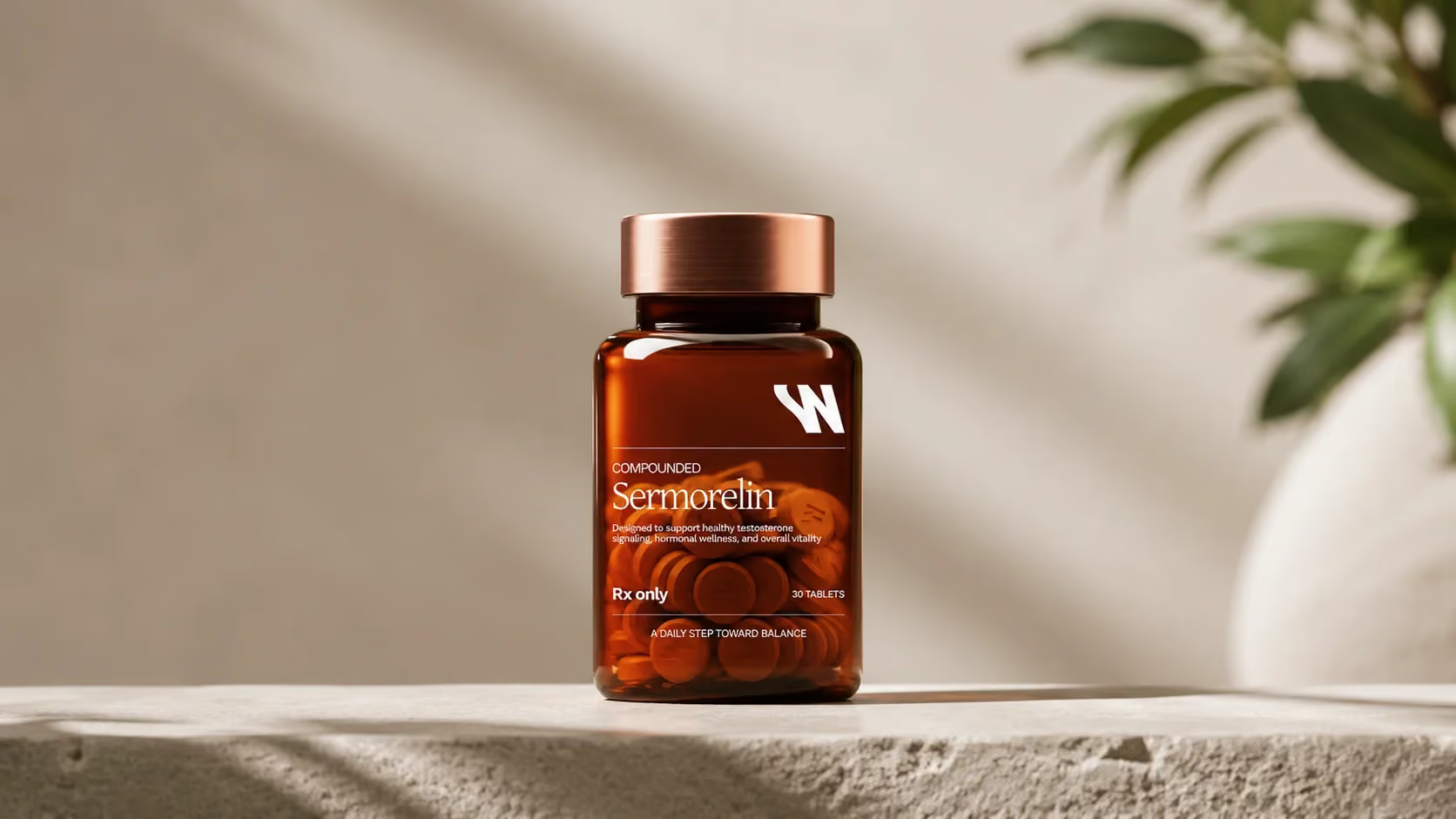
Telehealth has made sermorelin protocols meaningfully more accessible. Rather than scheduling repeated in-person visits with a specialty clinic, patients can now complete an online health intake, connect with a licensed physician remotely, and receive their compounded sermorelin directly at home, all through a compliant, fully supervised process.
This model compares favorably to IV clinic visits for time, cost, and convenience. The clinical oversight remains intact; the logistical friction is significantly reduced. For people who are interested in growth hormone optimization but have avoided pursuing it because of the time commitment and cost of traditional clinical channels, telehealth sermorelin programs remove most of those barriers.
A physician will typically review your medical history, assess symptoms of age-related hormone decline or adult growth hormone deficiency, and order baseline labs before prescribing. IGF-1 is a standard starting marker. From there, a protocol is individualized based on your baseline hormone levels, health history, and goals.
If you are exploring sermorelin as part of a physician-guided wellness protocol, Whoosh Wellness offers a streamlined path to connecting with a licensed physician and getting a protocol tailored to your health profile.
Conclusion
Sermorelin's regulatory story is more specific than most people realize. It was FDA-approved, commercially discontinued without safety findings, and remains legally prescribable through compounding pharmacies under physician supervision. The clinical rationale for adult use, particularly for age-related hormone decline and body composition support, is well-established in functional and regenerative medicine even though the formal FDA indication was pediatric.
For adults who want to support growth hormone levels without the risks associated with direct HGH injections, sermorelin offers a mechanism that works with the pituitary gland's own function rather than bypassing it. Combined with consistent daily use, proper physician oversight, and quality compounding, it is one of the more thoughtful tools available in the growth hormone optimization space.
About Whoosh
Whoosh is a premium physician-guided telehealth wellness platform helping health-conscious adults optimize performance, longevity, recovery, and metabolic health through modern prescription wellness protocols. From compounded semaglutide and tirzepatide to sermorelin, NAD+, glutathione, and enclomiphene, every protocol is physician-guided, fully compliant, and designed to fit into real life. Complete a streamlined online intake, connect with a licensed physician remotely, and receive your personalized protocol delivered directly to your door. Learn more at whooshwellness.com.
Frequently Asked Questions
Meet the Author

Reviewed By

Related articles
.avif)
.avif)